

Most drummers want to be as loud as possible. But what if the loudest kit in the room is also the worst-sounding one?
TL;DR
Modern drums are up to thirty times louder than in the 1950s — and every room pays the price. Close mics exist not because they capture drums well, but because loud drums leave no other choice. Learn why it matters to focus on sound, and not volume!
Who should read this
Preface: Drums were not always THAT loud. What close miking drums tells us about how they have changed
When drums are close-miked, the sound is reduced to a single point of contact: the head being miked. Nothing more. It is the acoustic equivalent of putting a magnetic pickup on a guitar — no matter how extraordinary the instrument sounds in the room, what you capture is just the strings vibrating. The body, the air, the resonance — gone. To record a guitar with any warmth and fullness, you would place a quality condenser microphone at a respectful distance. The same principle applies to drums, and the same distance that makes a guitar recording come alive is exactly what loud drums make impossible. Now you could say that is why we have overhead microphones, but they are capturing the cymbals, and to get them into the mix without overwhelming mess of the room (and drum bleed) added is a science in itself. For once because they also introduce drum bleed — the unfiltered, actual sound of the drums — which nobody really wants to hear unedited.
This is why post-production on modern drums is so demanding, and why it is consistently handed to the most experienced engineers in the room. What was once the craft of capturing an acoustic instrument has become the craft of synthetically reconstructing one — artificially restoring the warmth, depth and balance that the microphone placement could not preserve. The target, perhaps unsurprisingly, closely resembles what drums actually sounded like before volume became a selling point.
Consider the scale of what has changed. In the 1950s, a drummer would be playing at roughly 12 to 15 dB less volume than a modern drummer on a modern kit. That is not a subtle difference — it means today’s drums are up to thirty times louder than the instruments that produced the recordings engineers have spent decades trying to recreate in post. We have built an entire discipline of studio craft around compensating for a problem we manufactured ourselves. INSANE.
The Room Is Always Part of Your Sound
And the room is where that problem compounds. When you play in a room, your drums sound better the quieter they are. The room itself adds mess to your sound — which is exactly why drums are close-miked in the first place: to keep the room out of the drum sound. If your drums genuinely sounded good in a room, engineers would only use overheads. Close microphones are the proof that sound engineers know the room is working against you.
So unless you are playing open air, lowering your drum volume always makes your drums sound better. In Germany, you can count on one hand the rooms acoustically prepared for loud drums — Hansa Studio in Berlin being the legendary exception. People go there specifically because the room handles that volume. Everywhere else, the room is fighting you.
Think About Where You Actually Play
Consider this: your cellar is a room. Your rehearsal space is a room. Your studio is a room. Most venues you perform in are rooms. Drums, however, are not built with rooms in mind. They are optimized for raw volume and projection — properties that work beautifully in the open air and work against you nearly everywhere else.
If you believe a drummer should always be as loud as possible, you are either always playing open air — or you are not yet thinking about what your kit actually sounds like to everyone else in that room.
The Loudness Myth
There is a persistent myth in drumming: that if two instruments sound similar but one is 6 dB louder, the louder one is the better one. It is an instinctive reflex for many drummers, and one that deserves serious scrutiny.
Somewhere along the way, the industry made obnoxious volume a mark of quality. Meanwhile, the rest of the stage has quietly moved in the opposite direction. Over the past two decades, Marshall stacks have disappeared, loud floor monitors have been replaced by in-ears, and everything that can be direct-injected into the console is. Guitars, keys, bass – if it can be controlled, it is. The stage has become dramatically quieter, and for good reason.
The result is striking: after years of drummers fighting to be heard at all, drums are now frequently the only amplified sound on stage. In an overwhelming number of live situations today, the kit dominates everything around it — not because that is musically desirable, but simply because everything else has been tamed.
And where you do still find amplified instruments on stage? Those are precisely the smaller gigs — compact venues, modest PA systems — where the stage sound bleeds directly into what the audience hears. In other words, the situations where drum volume matters most are exactly the ones where rooms are most unforgiving.
The pandemic made this impossible to ignore. Forced into smaller venues once gigging was allowed again, more bands than ever had to confront a question they had never seriously asked before: how do you tame the drums in a smaller room? It is no coincidence that this period saw the rise and remarkable commercial success of tools like Adoro Silent Sticks, which reduce drum volume by 4 to 8 dB. For many drummers, it was a first encounter with the idea that less volume could be a legitimate and desirable goal, not a compromise.
The loudness reflex does not just fail acoustically. In the modern live context, it is increasingly difficult to justify at all.
The Physics: Every 3 dB Less Opens a New World
Here is where it gets interesting. Close microphones capture the batter head. Room microphones capture the full kit interacting with the space -and that is where the magic lives. The problem is that loud drums overload the room signal with resonance and reflections, forcing engineers to use room mics only as distant ambience rather than a real part of the mix.
But reduce your volume by just 3 dB, and the room disturbance is cut in half — which means you can use 50 percent more room sound in your mix without the mess. Drop 6 dB and you can incorporate four times more room sound. The pattern is clear: a quieter kit is a fuller-sounding kit, because the room can finally do its job.
Think of a choir. You would never record a live choir with close microphones; a choir sounds bigger precisely because of the room. Drums are no different in principle. The sheer volume of modern kits just makes it near-impossible to take advantage of that.

Start With the Snare
The snare is typically 4 to 8 dB louder than every other drum in your kit. That single fact forces engineers to reach for close mics just to balance the mix. Switching to a smaller snare — a 12-inch, for example — can dramatically bring your overall volume down, create a more balanced kit, and immediately open up your sound. It is one of the highest-impact changes you can make. If you don’t really want to play less loud, you can use lighter sticks, make your drums less numb — use less muffling, use single ply heads that give you a nice tone when playing with less thrust, and learn how to tune FOR THE ROOM, not for the mic.
So should we all use Silent Sticks™ now?
Nope. This is not an argument for Silent Sticks. Using Silent Sticks is actually a cheap workaround — it addresses the symptom, not the cause. The real shift is understanding that the room you play in is part of your instrument. Once you stop fighting it and start working with it, an entirely new world of sound opens up.
A drum kit that is less loud is the key to a better sound. That is not an opinion, it is acoustics. The further your microphones can sit from your drums, the fuller and more natural the kit sounds. And the only way to give yourself that distance is to bring your volume down.
I once saw a band set up their drums, a beautiful Ludwig Vistalite kit with acrylic shells. It was an open air gig, so there was no room that could interfere with the sound, but these drums are known for sounding best when they are played at medium force. I too often have witnessed drummers who override their acrylic drums causing them to sound bad even when closed mic’d. Picture me relieved when I saw the drummer playing these drums really considerate, with a good, soft touch, making them sing. Call me a nerd, but any loud drummer would have ruined that gig for me. After the set I met the band backstage — they were also from Hamburg and we met before. I told the drummer how, when I learned that he plays a vistalite, I had been afraid he might play it too loud. He instantly replied: “No, these drums have to be played gently, so they sound best!”. He knew. It was no accident. The band sounded great, of course, maybe no surprise given how much they have toured and how prominent they are in Germany (Kettcar, for those who wondered 🙂 -but this attitude is not found often with professional drummers. Often we are more concerned with how we look than how we sound.
Now take this one step further. Realizing that more sound pressure in a room does not do good for your drum sound, maybe we can reconsider our choices on what we play, how we tune, how hard we hit. Sure, there are gigs that call for the raw energy, but when you watch closely, you might find that many of those drummers who seem like they are smashing the drums just learned how to make big movements while they keep a constant medium volume level. Being considerate when it comes to your drum sound should not stop with what brand of drums you play…. If you want to learn more about how to improve your sound in any room, come along. I got more…
About the Author
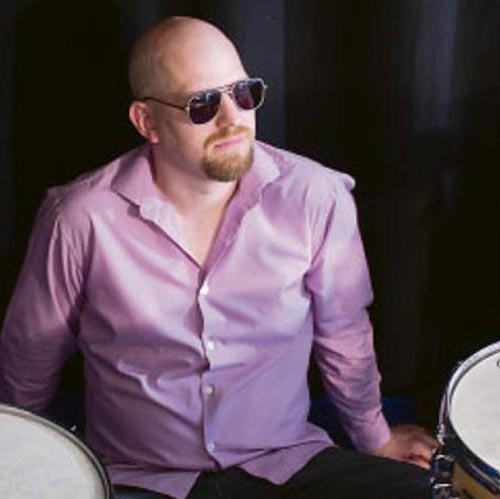
Stefan Korth is a drum builder with over two decades of experience crafting instruments for professional recording and acoustic performance. The drums he has built have appeared on some of the most iconic recordings of the past twenty years, among them the double-platinum self titled debut album of Royal Blood, a record that set a new benchmark for raw, powerful drum sound in modern rock.
The principles he applies to drum building, controlling volume, maximising resonance, working with the room rather than against it, are the same ones he writes and speaks about for drummers at every level.

Stefan is a drum maker and entrepreneur. With his “silent drums”, he has his own approach to drum building: he has specialized in building drums that are actually played acoustically. In line with this, he created and very successfully sells Silent Sticks, drumsticks that are 80% quieter, as well as Heritage Heads, attack-reduced drumheads for acoustic use. He is married, has 5 children and lives with his family in Hamburg.


You must be logged in to post a comment.